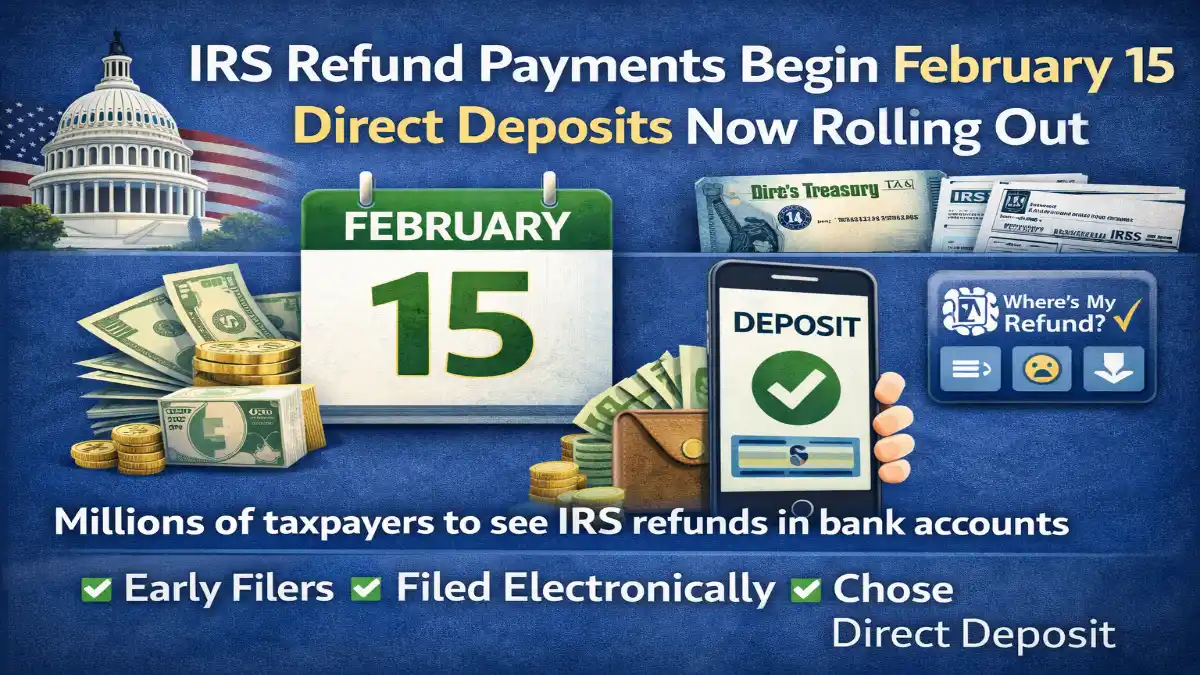
The 2026 tax season is moving into a key phase as IRS refund payments officially begin arriving from February 15. Millions of Americans who filed early and selected direct deposit may start seeing funds appear in their bank accounts over the coming days.
This marks the first major refund wave of the season, offering relief to taxpayers waiting on their federal returns.
Who Is Getting Paid First?
The Internal Revenue Service typically issues refunds first to taxpayers who:
- Filed electronically
- Submitted accurate, error-free returns
- Chose direct deposit
- Filed early in the season
Returns that meet these criteria are processed faster and move quickly from approval to payment.
How Fast Will Direct Deposits Arrive?
Once a refund is approved and marked as sent, most direct deposits reach bank accounts within one to three business days. However, the exact timing depends on individual banking institutions.
Some banks may post deposits earlier, while others may take slightly longer to reflect the payment.
What About Paper Check Refunds?
Taxpayers who opted for paper checks should expect longer wait times. Mailed refunds typically take additional days or even weeks depending on processing volume and postal delivery schedules.
Direct deposit remains the fastest and most secure refund method.
Refunds That May Be Delayed
Not all refunds will arrive immediately. Returns claiming certain refundable credits, such as the Earned Income Tax Credit or Additional Child Tax Credit, often undergo additional review.
Other common causes of delay include:
- Incorrect bank account information
- Identity verification requirements
- Income mismatches
- Missing documentation
In these cases, refunds may be issued later in February or into March.
How to Check Your Refund Status
Taxpayers can monitor their refund status through the IRS refund tracking system. Refund progress typically moves through three stages:
- Return Received
- Refund Approved
- Refund Sent
Once marked as sent, deposits usually follow shortly after.
What This Means for Taxpayers
The February 15 refund wave signals that IRS processing is fully underway. Early filers should continue monitoring their bank accounts and refund status tools over the next several days.
For those who have not yet filed, submitting an accurate return electronically and selecting direct deposit remains the best way to receive refunds quickly.
Final Takeaway
IRS refund payments beginning February 15 represent the first major payout cycle of the 2026 tax season. While many taxpayers will receive deposits quickly, processing times vary based on filing method and return complexity.